A Big Brisbane Bird Quest for 2018
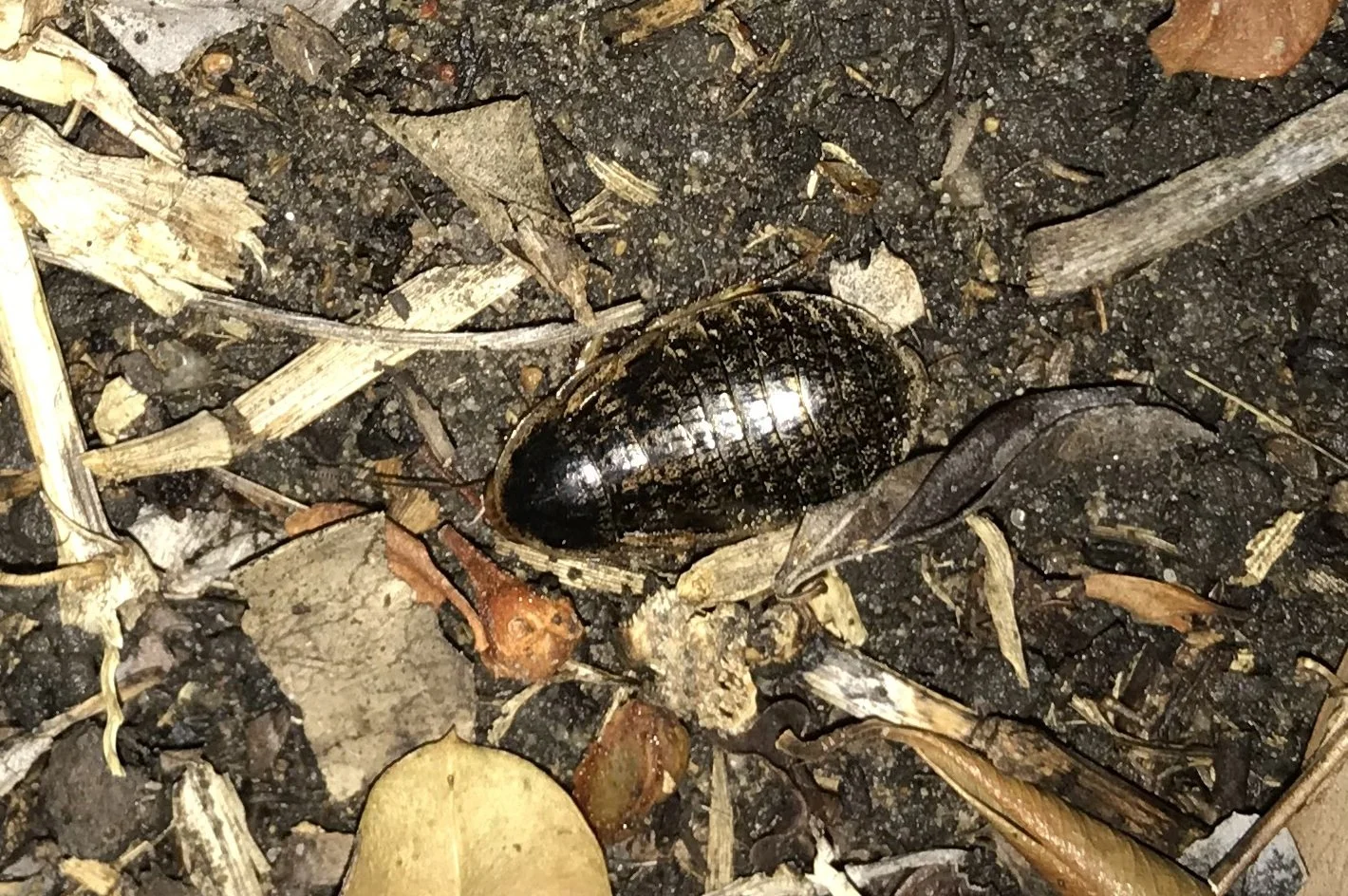
Hunkering down during New Year’s Eve celebrations at South Bank Parklands, in central urban Brisbane - an unidentified native cockroach of the genus Calolampra. See https://www.inaturalist.org/observations/9856935
Rich Fuller is doing a big year of birding within the boundary of Brisbane City – trying to see as many species as possible within the geographical limits of this amazingly biodiverse city! Brisbane has rainforests, heathlands, various coastal and freshwater wetland habitats as well as extensive eucalypt and other woodlands. This makes for a very rich bird fauna, with 383 species recorded so far in eBird – a citizen science website where birdwatchers can record their sightings. Attempting to see as many species as possible in a year is chance for a bit of friendly competition, and also highlights the very rich birdlife of the River City. All my sightings will be entered into eBird, taking advantage of the new Local Government Authority boundaries made available in eBird Australia in late 2017.
My target for the year is 253 species, but I’m secretly hoping for something a little higher.
To make year listing efforts comparable among observers, I’m working to a few basic rules:
1. Bird sensibly – the bird’s welfare is paramount.
2. A bird’s occurrence at the time and place of observation must not be because it, or its recent ancestors, has ever been transported or otherwise assisted by humans for reasons other than for rehabilitation purposes. “Established” is determined by adherence to the ABA rules at http://listing.aba.org/criteria-determining-establishment-exotics/. Note that records of domestic and escaped birds are welcomed by eBird Australia – any species only represented by such records will need to be substracted from your year list total at the end of the year.
3. Each observation must constitute a valid record in eBird.
4. Each observation must be submitted to eBird, and checklists must be submitted promptly after the observation has occurred. If submission cannot happen within a reasonable timeframe (e.g. by the evening of the day of the observation), observers should endeavour to contact other year list competitors or otherwise disseminate any records of particularly noteworthy species.
5. Sensitive records can still be counted in official totals, but observers are encouraged to suppress records from eBird Australia only in the most extreme of circumstances. We encourage observers to work with the review team to display records in eBird Australia a way that recognises any sensitivities involved.
6. Records that are invalidated by eBird reviewers will not be countable in official totals. As per usual process, photographs, sound recordings or detailed field notes should be provided to eBird for noteworthy records to minimise the risk of invalidation of a good record.
7. Birds must be seen in or from the official LGA boundary. At sea records will be assigned to the closest point of land up to a limit of 200 nautical miles. Observers are relied upon to use honesty, transparency and good judgement. The best course of action is to report the precise circumstances of an observation and then the record can be cogitated upon later.
If a valid location is erroneously assigned to another LGA, notify the eBird Australia review team and they will endeavour to rectify the issue.
I’ve been through the eBird records for Brisbane City Council area, and I reckon about 253 species are possible in my Biggish Year. I’ve compiled the list below, and to make it more exciting I’ve emulated the USA code system, where Code 5 are the rarest, and Code 1 the commonest. From the total of 378 species recorded in eBird for Brisbane so far, I have classified them as follows:
Code 1: 166 species
Code 2: 65 species
Code 3: 40 species
Code 4: 37 species
Code 5: 70 species
This is a work in progress – comments to r.fuller@uq.edu.au welcome! And of course, if you find any Code 5 rarities and tell me about it, I would be delighted!
| Common Name | Chance | Code |
| Magpie Goose | 100% | 1 |
| Plumed Whistling-Duck | 90% | 2 |
| Wandering Whistling-Duck | 100% | 1 |
| Freckled Duck | 20% | 5 |
| Black Swan | 100% | 1 |
| Radjah Shelduck | 5% | 5 |
| Cotton Pygmy-Goose | 80% | 5 |
| Australian Wood Duck | 100% | 1 |
| Australian Shoveler | 40% | 5 |
| Pacific Black Duck | 100% | 1 |
| Grey Teal | 100% | 1 |
| Chestnut Teal | 100% | 1 |
| Pink-eared Duck | 85% | 3 |
| Hardhead | 100% | 1 |
| Musk Duck | 5% | 5 |
| Australian Brushturkey | 100% | 1 |
| Brown Quail | 100% | 1 |
| King Quail | 1% | 5 |
| Stubble Quail | 1% | 5 |
| Australasian Grebe | 100% | 1 |
| Hoary-headed Grebe | 20% | 5 |
| Great Crested Grebe | 95% | 4 |
| Yellow-nosed Albatross | 10% | 3 |
| Black-browed Albatross | 1% | 3 |
| Southern Giant-Petrel | 1% | 3 |
| Cape Petrel | 1% | 3 |
| Kermadec Petrel | 1% | 3 |
| Providence Petrel | 1% | 3 |
| White-necked Petrel | 1% | 3 |
| Gould s Petrel | 5% | 3 |
| Fairy Prion | 1% | 3 |
| Antarctic Prion | 1% | 3 |
| Slender-billed Prion | 1% | 3 |
| Tahiti Petrel | 1% | 3 |
| Streaked Shearwater | 1% | 3 |
| Flesh-footed Shearwater | 1% | 3 |
| Wedge-tailed Shearwater | 10% | 3 |
| Buller s Shearwater | 1% | 3 |
| Short-tailed Shearwater | 10% | 3 |
| Hutton s Shearwater | 1% | 3 |
| Fluttering Shearwater | 10% | 3 |
| Wilson s Storm-Petrel | 5% | 3 |
| White-faced Storm-Petrel | 1% | 3 |
| White-bellied Storm-Petrel | 1% | 3 |
| Black-bellied Storm-Petrel | 1% | 3 |
| Black-necked Stork | 90% | 5 |
| Lesser Frigatebird | 5% | 3 |
| Great Frigatebird | 1% | 3 |
| Masked Booby | 1% | 3 |
| Brown Booby | 20% | 3 |
| Red-footed Booby | 1% | 3 |
| Australasian Gannet | 100% | 3 |
| Little Pied Cormorant | 100% | 1 |
| Great Cormorant | 95% | 2 |
| Little Black Cormorant | 100% | 1 |
| Pied Cormorant | 100% | 1 |
| Australasian Darter | 100% | 1 |
| Australian Pelican | 100% | 1 |
| Australian Little Bittern | 90% | 4 |
| Black Bittern | 50% | 4 |
| White-necked Heron | 75% | 5 |
| Great Egret | 100% | 1 |
| Intermediate Egret | 100% | 1 |
| White-faced Heron | 100% | 1 |
| Little Egret | 100% | 1 |
| Eastern Reef Egret | 75% | 2 |
| Cattle Egret | 100% | 1 |
| Striated Heron | 100% | 1 |
| Nankeen Night-Heron | 90% | 2 |
| Glossy Ibis | 90% | 5 |
| Australian White Ibis | 100% | 1 |
| Straw-necked Ibis | 100% | 1 |
| Royal Spoonbill | 100% | 1 |
| Yellow-billed Spoonbill | 60% | 5 |
| Osprey | 100% | 1 |
| Black-shouldered Kite | 90% | 2 |
| Black-breasted Buzzard | 1% | 5 |
| Square-tailed Kite | 60% | 3 |
| Pacific Baza | 90% | 4 |
| Little Eagle | 20% | 3 |
| Wedge-tailed Eagle | 40% | 3 |
| Swamp Harrier | 30% | 4 |
| Spotted Harrier | 15% | 4 |
| Grey Goshawk | 50% | 3 |
| Brown Goshawk | 100% | 1 |
| Collared Sparrowhawk | 100% | 2 |
| Black Kite | 70% | 4 |
| Whistling Kite | 100% | 1 |
| Brahminy Kite | 100% | 1 |
| White-bellied Sea-Eagle | 100% | 1 |
| Buff-banded Rail | 100% | 1 |
| Lewin s Rail | 95% | 2 |
| Pale-vented Bush-hen | 100% | 2 |
| Australian Spotted Crake | 5% | 5 |
| Baillon s Crake | 95% | 4 |
| Spotless Crake | 95% | 4 |
| Australasian Swamphen | 100% | 1 |
| Dusky Moorhen | 100% | 1 |
| Black-tailed Native-hen | 1% | 5 |
| Eurasian Coot | 100% | 1 |
| Brolga | 20% | 5 |
| Bush Stone-curlew | 100% | 1 |
| Beach Stone-curlew | 100% | 2 |
| Black-winged Stilt | 100% | 1 |
| Red-necked Avocet | 100% | 2 |
| Australian Pied Oystercatcher | 100% | 1 |
| South Island Pied Oystercatcher | 5% | 5 |
| Sooty Oystercatcher | 90% | 2 |
| Grey Plover | 75% | 4 |
| Pacific Golden-Plover | 100% | 1 |
| Banded Lapwing | 5% | 5 |
| Masked Lapwing | 100% | 1 |
| Lesser Sand-Plover | 100% | 1 |
| Greater Sand-Plover | 80% | 2 |
| Double-banded Plover | 80% | 2 |
| Red-capped Plover | 100% | 1 |
| Red-kneed Dotterel | 100% | 1 |
| Black-fronted Dotterel | 100% | 1 |
| Australian Painted-Snipe | 10% | 5 |
| Comb-crested Jacana | 100% | 1 |
| Whimbrel | 100% | 1 |
| Little Curlew | 5% | 5 |
| Eastern Curlew | 100% | 1 |
| Bar-tailed Godwit | 100% | 1 |
| Black-tailed Godwit | 100% | 1 |
| Ruddy Turnstone | 80% | 2 |
| Great Knot | 100% | 1 |
| Red Knot | 80% | 2 |
| Ruff | 20% | 5 |
| Broad-billed Sandpiper | 40% | 4 |
| Sharp-tailed Sandpiper | 100% | 1 |
| Curlew Sandpiper | 100% | 1 |
| Long-toed Stint | 5% | 5 |
| Red-necked Stint | 100% | 1 |
| Sanderling | 50% | 4 |
| Pectoral Sandpiper | 50% | 4 |
| Asian Dowitcher | 80% | 4 |
| Latham s Snipe | 100% | 1 |
| Terek Sandpiper | 80% | 2 |
| Common Sandpiper | 75% | 4 |
| Grey-tailed Tattler | 100% | 1 |
| Wandering Tattler | 80% | 2 |
| Common Greenshank | 100% | 1 |
| Lesser Yellowlegs | 1% | 5 |
| Marsh Sandpiper | 100% | 1 |
| Wood Sandpiper | 75% | 4 |
| Red-backed Buttonquail | 10% | 4 |
| Black-breasted Buttonquail | 20% | 4 |
| Painted Buttonquail | 40% | 4 |
| Red-chested Buttonquail | 1% | 5 |
| Australian Pratincole | 1% | 5 |
| Pomarine Jaeger | 10% | 3 |
| Arctic Jaeger | 10% | 3 |
| Long-tailed Jaeger | 2% | 3 |
| Silver Gull | 100% | 1 |
| Franklin s Gull | 1% | 5 |
| Pacific Gull | 1% | 5 |
| Kelp Gull | 1% | 5 |
| Common Noddy | 10% | 3 |
| Black Noddy | 3% | 3 |
| Sooty Tern | 5% | 5 |
| Bridled Tern | 3% | 5 |
| Little Tern | 100% | 1 |
| Gull-billed Tern | 100% | 1 |
| Caspian Tern | 100% | 1 |
| White-winged Black Tern | 90% | 2 |
| Whiskered Tern | 100% | 1 |
| Common Tern | 80% | 2 |
| Crested Tern | 100% | 1 |
| Lesser Crested Tern | 70% | 2 |
| Rock Dove | 100% | 1 |
| White-headed Pigeon | 70% | 2 |
| Spotted Dove | 100% | 1 |
| Brown Cuckoo-Dove | 100% | 1 |
| Pacific Emerald Dove | 70% | 2 |
| Common Bronzewing | 100% | 1 |
| Crested Pigeon | 100% | 1 |
| Wonga Pigeon | 100% | 1 |
| Diamond Dove | 5% | 5 |
| Peaceful Dove | 100% | 1 |
| Bar-shouldered Dove | 100% | 1 |
| Wompoo Fruit-Dove | 90% | 2 |
| Superb Fruit-Dove | 40% | 2 |
| Rose-crowned Fruit-Dove | 100% | 2 |
| Topknot Pigeon | 100% | 2 |
| Pheasant Coucal | 100% | 1 |
| Pacific Koel | 100% | 1 |
| Channel-billed Cuckoo | 100% | 1 |
| Horsfield s Bronze-Cuckoo | 100% | 2 |
| Shining Bronze-Cuckoo | 100% | 1 |
| Little Bronze-Cuckoo | 100% | 2 |
| Pallid Cuckoo | 50% | 4 |
| Fan-tailed Cuckoo | 100% | 1 |
| Brush Cuckoo | 100% | 1 |
| Oriental Cuckoo | 70% | 4 |
| Sooty Owl | 100% | 2 |
| Australian Masked-Owl | 100% | 1 |
| Australasian Grass-Owl | 100% | 2 |
| Barn Owl | 60% | 4 |
| Powerful Owl | 100% | 1 |
| Barking Owl | 20% | 4 |
| Southern Boobook | 100% | 1 |
| Tawny Frogmouth | 100% | 1 |
| Marbled Frogmouth | 100% | 2 |
| White-throated Nightjar | 80% | 2 |
| Australian Owlet-nightjar | 100% | 2 |
| White-throated Needletail | 100% | 1 |
| Australian Swiftlet | 5% | 5 |
| Pacific Swift | 20% | 2 |
| Azure Kingfisher | 100% | 2 |
| Laughing Kookaburra | 100% | 1 |
| Blue-winged Kookaburra | 1% | 5 |
| Red-backed Kingfisher | 1% | 5 |
| Forest Kingfisher | 100% | 1 |
| Torresian Kingfisher | 100% | 1 |
| Sacred Kingfisher | 100% | 1 |
| Rainbow Bee-eater | 100% | 1 |
| Dollarbird | 100% | 1 |
| Nankeen Kestrel | 100% | 2 |
| Australian Hobby | 100% | 2 |
| Brown Falcon | 100% | 2 |
| Black Falcon | 5% | 5 |
| Peregrine Falcon | 100% | 2 |
| Red-tailed Black-Cockatoo | 5% | 5 |
| Glossy Black-Cockatoo | 5% | 5 |
| Yellow-tailed Black-Cockatoo | 80% | 2 |
| Major Mitchell s Cockatoo | 100% | 2 |
| Galah | 100% | 1 |
| Long-billed Corella | 90% | 2 |
| Little Corella | 100% | 1 |
| Sulphur-crested Cockatoo | 100% | 1 |
| Cockatiel | 5% | 5 |
| Australian King-Parrot | 100% | 1 |
| Red-winged Parrot | 5% | 5 |
| Turquoise Parrot | 1% | 5 |
| Swift Parrot | 5% | 5 |
| Crimson Rosella | 100% | 1 |
| Eastern Rosella | 5% | 5 |
| Pale-headed Rosella | 100% | 1 |
| Red-rumped Parrot | 10% | 5 |
| Budgerigar | 5% | 5 |
| Musk Lorikeet | 70% | 2 |
| Little Lorikeet | 100% | 1 |
| Rainbow Lorikeet | 100% | 1 |
| Scaly-breasted Lorikeet | 100% | 1 |
| Noisy Pitta | 100% | 1 |
| Green Catbird | 100% | 1 |
| Regent Bowerbird | 100% | 2 |
| Satin Bowerbird | 100% | 2 |
| White-throated Treecreeper | 100% | 1 |
| Red-browed Treecreeper | 70% | 2 |
| Brown Treecreeper | 5% | 5 |
| Variegated Fairywren | 100% | 1 |
| Superb Fairywren | 100% | 1 |
| Red-backed Fairywren | 100% | 1 |
| Eastern Spinebill | 100% | 1 |
| Lewin s Honeyeater | 100% | 1 |
| White-fronted Honeyeater | 1% | 5 |
| Yellow-faced Honeyeater | 100% | 1 |
| Yellow-tufted Honeyeater | 10% | 4 |
| Bell Miner | 100% | 1 |
| Noisy Miner | 100% | 1 |
| Spiny-cheeked Honeyeater | 1% | 5 |
| Little Wattlebird | 100% | 2 |
| Regent Honeyeater | 1% | 5 |
| Red Wattlebird | 1% | 5 |
| Mangrove Honeyeater | 100% | 1 |
| Fuscous Honeyeater | 100% | 1 |
| Dusky Honeyeater | 1% | 5 |
| Scarlet Honeyeater | 100% | 1 |
| Brown Honeyeater | 100% | 1 |
| New Holland Honeyeater | 100% | 1 |
| White-cheeked Honeyeater | 50% | 2 |
| Blue-faced Honeyeater | 100% | 1 |
| White-throated Honeyeater | 100% | 1 |
| White-naped Honeyeater | 100% | 2 |
| Brown-headed Honeyeater | 10% | 4 |
| Black-chinned Honeyeater | 10% | 4 |
| Striped Honeyeater | 100% | 1 |
| Painted Honeyeater | 1% | 5 |
| Little Friarbird | 100% | 1 |
| Noisy Friarbird | 100% | 1 |
| Spotted Pardalote | 100% | 1 |
| Striated Pardalote | 100% | 1 |
| Yellow-throated Scrubwren | 100% | 2 |
| White-browed Scrubwren | 100% | 1 |
| Large-billed Scrubwren | 100% | 1 |
| Speckled Warbler | 100% | 2 |
| Buff-rumped Thornbill | 100% | 2 |
| Brown Thornbill | 100% | 1 |
| Yellow-rumped Thornbill | 100% | 2 |
| Yellow Thornbill | 40% | 4 |
| Striated Thornbill | 100% | 2 |
| Weebill | 40% | 4 |
| White-throated Gerygone | 100% | 1 |
| Brown Gerygone | 100% | 1 |
| Mangrove Gerygone | 100% | 1 |
| Grey-crowned Babbler | 10% | 4 |
| Australian Logrunner | 100% | 2 |
| Eastern Whipbird | 100% | 1 |
| Spotted Quail-thrush | 60% | 2 |
| White-breasted Woodswallow | 100% | 1 |
| Masked Woodswallow | 10% | 5 |
| White-browed Woodswallow | 10% | 5 |
| Black-faced Woodswallow | 5% | 5 |
| Dusky Woodswallow | 10% | 5 |
| Little Woodswallow | 2% | 5 |
| Grey Butcherbird | 100% | 1 |
| Pied Butcherbird | 100% | 1 |
| Australian Magpie | 100% | 1 |
| Pied Currawong | 100% | 1 |
| Ground Cuckooshrike | 1% | 5 |
| Barred Cuckooshrike | 50% | 4 |
| Black-faced Cuckooshrike | 100% | 1 |
| White-bellied Cuckooshrike | 100% | 2 |
| White-winged Triller | 90% | 2 |
| Varied Triller | 100% | 1 |
| Common Cicadabird | 100% | 1 |
| Varied Sittella | 100% | 1 |
| Crested Shrike-tit | 30% | 4 |
| Little Shrikethrush | 100% | 1 |
| Grey Shrikethrush | 100% | 1 |
| Golden Whistler | 100% | 1 |
| Rufous Whistler | 100% | 1 |
| Olive-backed Oriole | 100% | 1 |
| Australasian Figbird | 100% | 1 |
| Spangled Drongo | 100% | 1 |
| Willie-wagtail | 100% | 1 |
| Rufous Fantail | 100% | 1 |
| Grey Fantail | 100% | 1 |
| White-eared Monarch | 100% | 1 |
| Black-faced Monarch | 100% | 2 |
| Spectacled Monarch | 100% | 2 |
| Magpie-lark | 100% | 1 |
| Leaden Flycatcher | 100% | 1 |
| Satin Flycatcher | 30% | 4 |
| Restless Flycatcher | 60% | 4 |
| Shining Flycatcher | 10% | 4 |
| Torresian Crow | 100% | 1 |
| Australian Raven | 1% | 5 |
| Apostlebird | 100% | 2 |
| Paradise Riflebird | 95% | 2 |
| Jacky-winter | 10% | 4 |
| Scarlet Robin | 5% | 5 |
| Red-capped Robin | 10% | 5 |
| Rose Robin | 90% | 2 |
| Hooded Robin | 5% | 5 |
| Pale-yellow Robin | 100% | 2 |
| Eastern Yellow Robin | 100% | 1 |
| Australasian Bushlark | 10% | 4 |
| Welcome Swallow | 100% | 1 |
| Fairy Martin | 100% | 1 |
| Tree Martin | 100% | 1 |
| White-backed Swallow | 1% | 5 |
| Australian Reed-Warbler | 100% | 1 |
| Little Grassbird | 50% | 2 |
| Brown Songlark | 1% | 5 |
| Tawny Grassbird | 100% | 1 |
| Rufous Songlark | 1% | 4 |
| Golden-headed Cisticola | 100% | 1 |
| Silvereye | 100% | 1 |
| Russet-tailed Thrush | 100% | 1 |
| Common Blackbird | 1% | 5 |
| European Starling | 100% | 1 |
| Common Myna | 100% | 1 |
| Mistletoebird | 100% | 1 |
| Eastern Yellow Wagtail | 5% | 5 |
| White Wagtail | 1% | 5 |
| Australasian Pipit | 100% | 1 |
| European Greenfinch | 1% | 5 |
| European Goldfinch | 1% | 5 |
| House Sparrow | 100% | 1 |
| Red-browed Finch | 100% | 1 |
| Plum-headed Finch | 20% | 5 |
| Zebra Finch | 5% | 5 |
| Double-barred Finch | 100% | 1 |
| Scaly-breasted Munia | 1% | 3 |
| Chestnut-breasted Munia | 100% | 1 |