Migrant moths
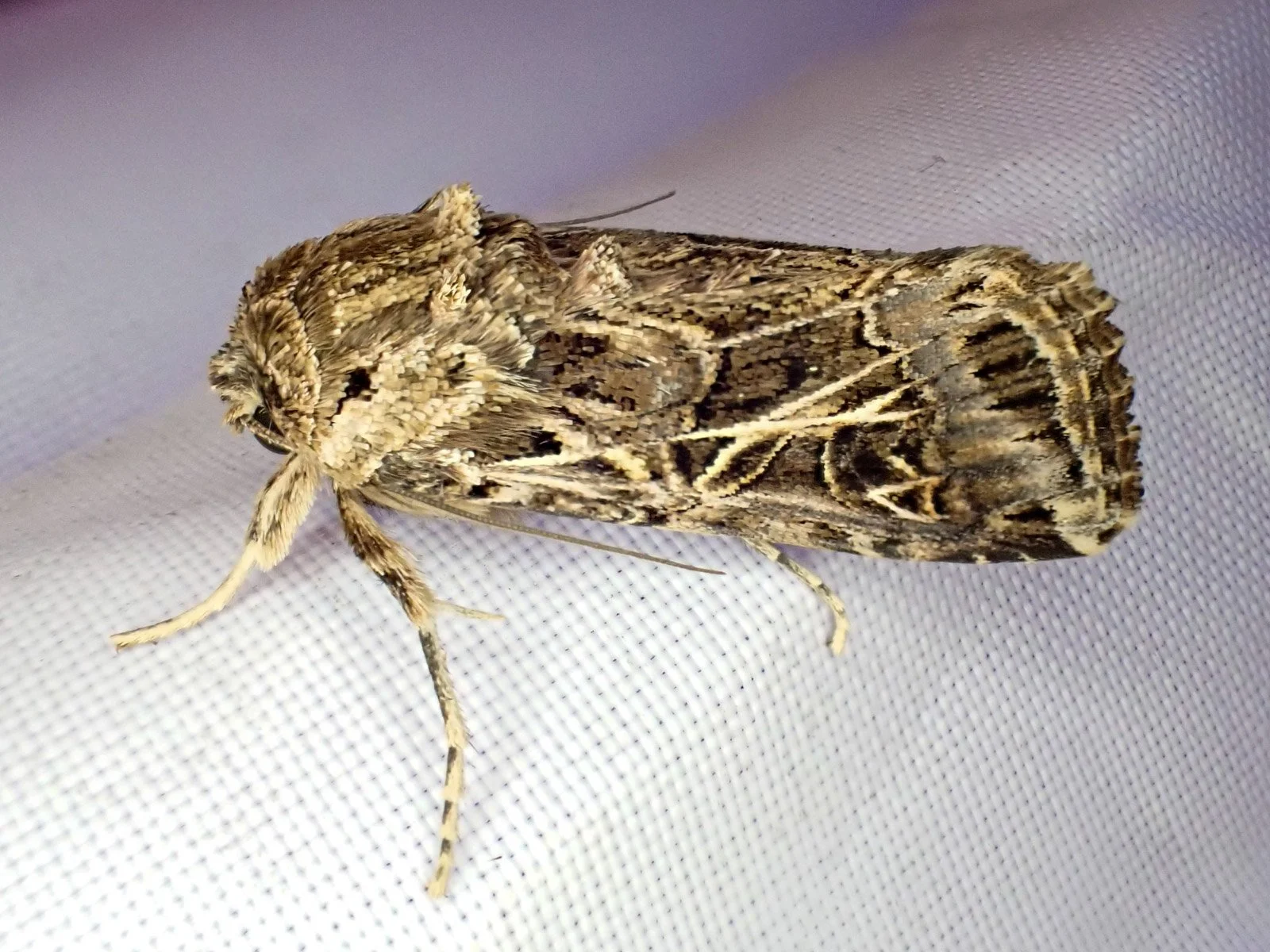
The intricately-patterned Spodoptera litura
Moth numbers were down this evening, in parallel with the declining night-time temperatures. Among the thin haul was this lovely Spodoptera litura. A widely-distributed species from India to the central Pacific, I hadn’t thought much about it until going to a really interesting talk by Dr Satoshi Kawakita of Japan’s National Agriculture and Food Research Organization last week. Turns out that this species cannot overwinter where mean temperatures dip below 10 degrees during winter. It is therefore migratory in some parts of its distribution, pushing beyond its year-round areas of residency. Satoshi covered the example of moths from China pushing into Japan in spring and breeding over several successive generations before dying out during autumn as the temperatures drop. Similarly, the species is thought to migrate into New Zealand from Australia in the spring and disappear again in late autumn. Within Australia, the species appears to be migratory in the far SE, and Brisbane is kind of on the border of acceptable winter temperatures. Apparently these migrations are one-way movements, without individuals making it back. This all seems quite mysterious to me, and I wonder what maintains these migrations from an evolutionary point of view.
Well it was pretty cold tonight, and I thought it was ironic that this species was at the moth light. I’ll pay closer attention to them from now on, and maybe one day have a good look at iNaturalist records to see if I can work out anything about the detail of their migrations within Australia. I’ve had 22 observations of this species in Brisbane, and across SE Queensland at large, there is a very clear bias in records towards the warmer months. This said, there are some records of larvae and adults all the way through winter (see graph below).
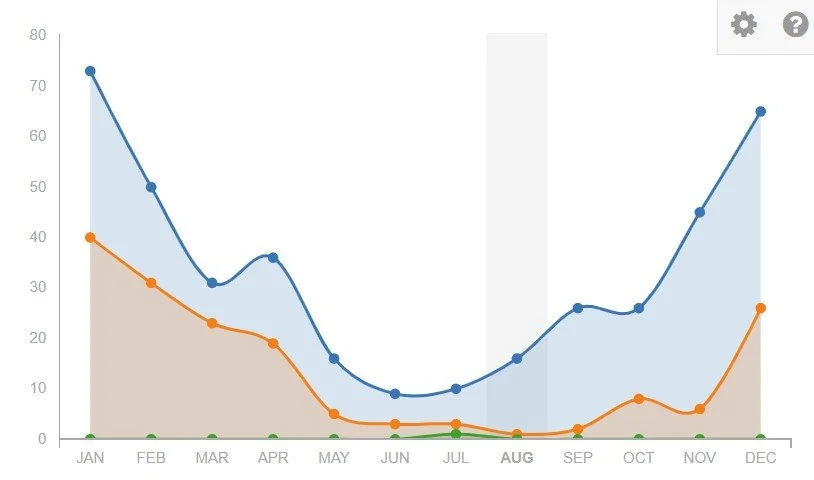
Seasonal occurrence of Spodopera litura in south-east Queensland, showing adults in blue, larvae in orange, and pupae in green.