Good news: Monarch butterflies can recover—if we act together, and act now
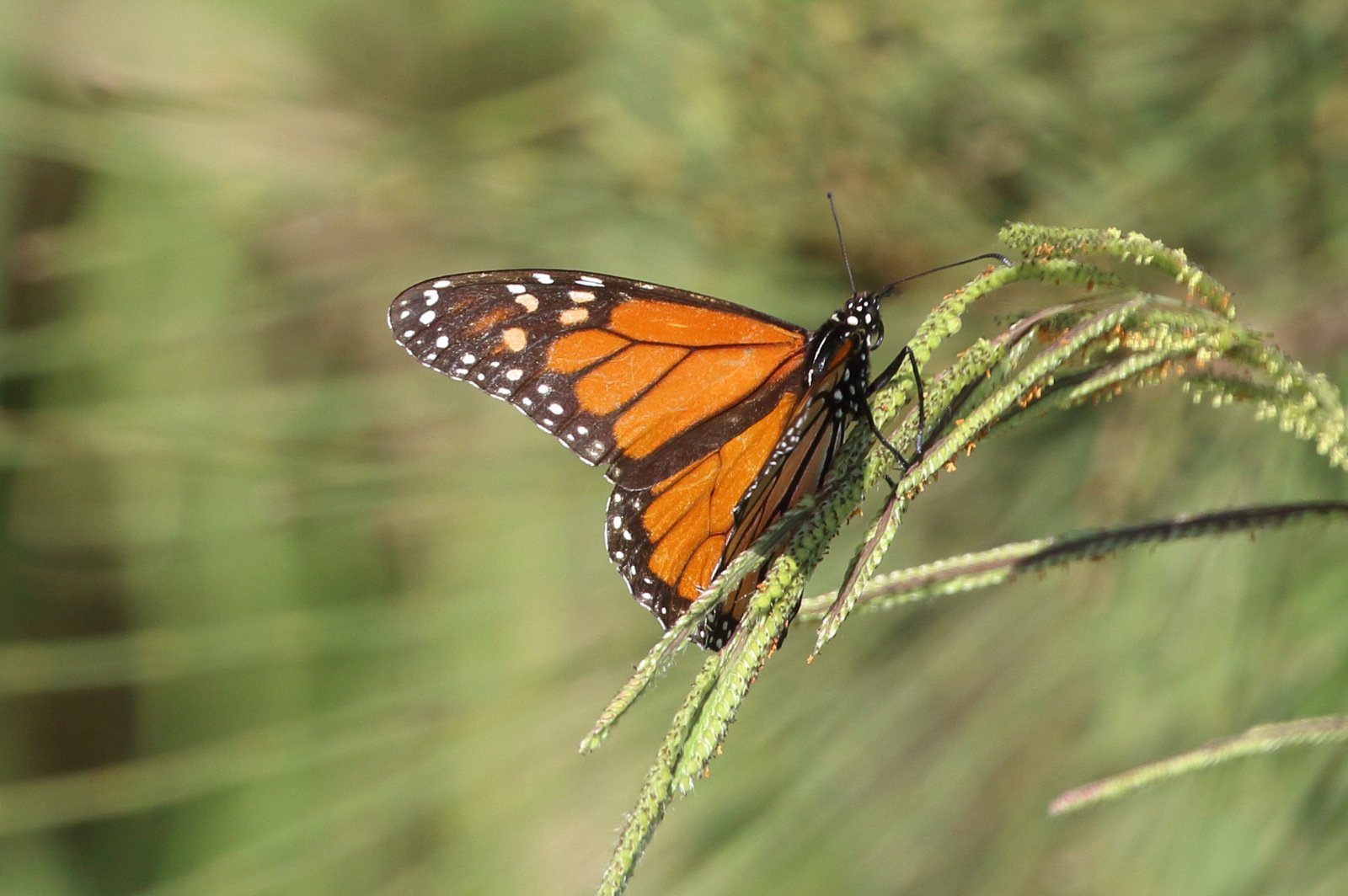
The beautiful monarch butterfly is known for its long distance, multi-generational migration flights. Photo by Richard Fuller (CC0).
Eastern North America’s monarch butterflies have declined dramatically in recent decades. But a new study led by Tyler Flockhart, together with colleagues from Canada, Australia, and Mexico, shows that recovery is possible—if countries act together and act quickly. Using a population model that followed monarchs through their full migration, the team tested how different conservation strategies across the United States, Canada, and Mexico would play out over the next five years. Their conclusion is clear: immediate, coordinated action across borders gives monarchs the best chance of bouncing back.
The researchers compared different options—restoring milkweed in the southern, central, or northern breeding areas of the US and Canada, protecting wintering forest in Mexico, or doing nothing. They then asked which strategy would deliver the strongest recovery if applied year by year. The results show that starting right away, with all three countries working together, consistently outperformed single-nation or delayed plans. Waiting even a few years sharply reduced the odds of success.
The best strategy turned out to be restoring milkweed in the central United States for four years, then shifting investment northward in the fifth year. This sequence supports the monarchs’ breeding cycle, ensuring that the crucial final generation of butterflies heading to Mexico is as strong as possible. Investments in overwintering forest were rarely chosen by the model in the short term, while the southern breeding areas provided little benefit relative to other options.
If this coordinated plan is followed, monarch populations wintering in Mexico are projected to grow from their current level of around 0.9 hectares of occupied forest to about 5 hectares by 2030. While this would not quite reach the long-term target of 6 hectares (around 132 million butterflies), it represents a major step toward recovery.
The team also estimated the costs. About US $30 million per year for five years—roughly US $150 million in total—would be enough to restore the habitat needed to put monarchs back on track. This amount covers planting hundreds of millions of milkweed stems, reversing much of the loss that has driven declines over recent decades. The plan would give monarchs about an 80 percent chance of holding steady or increasing above today’s levels, and around a 20 percent chance of reaching the 6-hectare recovery target within the timeframe.
The message is simple: monarchs cross three countries, and their survival depends on cooperation across those borders. Acting in isolation or delaying decisions will not be enough. But with immediate, coordinated investment, the recovery of one of the world’s most iconic migratory insects is within reach.