High-Integrity Forests Are Critical for Forest Specialist Birds
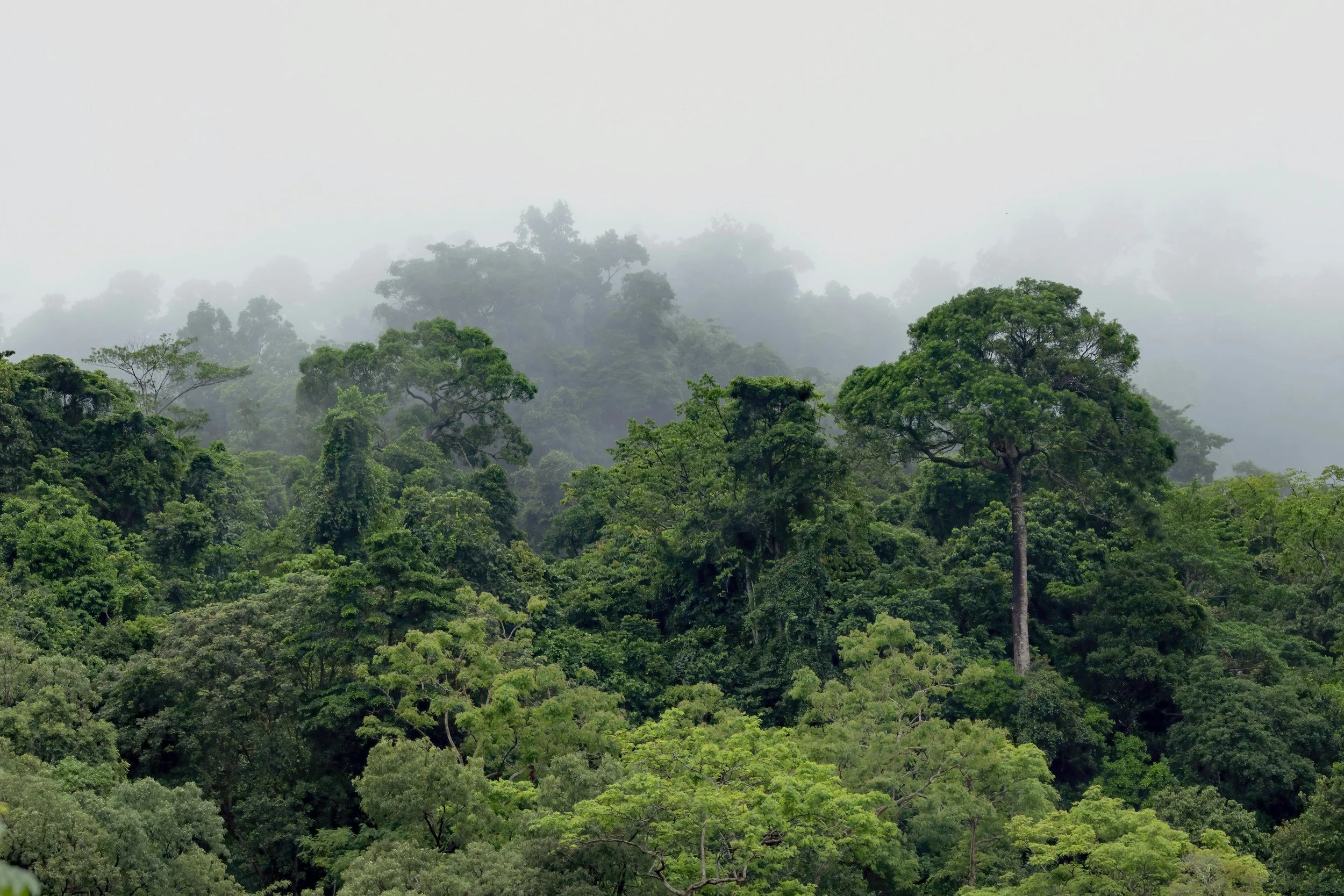
High quality forest makes for high quality birding. Image © David Clode.
Across much of the planet, forests are shrinking, but they are also being altered. While deforestation has long been recognised as a threat to biodiversity, the transformation of remaining forests through logging, fragmentation, conversion to plantations, or selective removal of understorey vegetation constitutes a quieter and less visible crisis. These altered forests still appear green in satellite imagery, and remain classified as “forest” in land-use records. Yet for many forest-dependent species, they may no longer function as real forests.
A new 2025 study led by Dr Corey Callaghan confronts this issue by asking a deceptively simple but critical question: Do forest-specialist birds require not just forest, but high-integrity forest? The answer — drawn from global data spanning multiple continents — is an unequivocal yes. The research shows that many forest specialists — species that depend on mature structure, stable microclimate, layered vegetation, and intact understorey — decline sharply when forest integrity drops below natural baselines.
Forest integrity encompasses more than just tree cover: it includes forest age, species composition, understorey development, canopy height, connectivity, and disturbance history. High-integrity forests are layered, complex, humid, and buffered from edge and disturbance effects. Degraded forests, in contrast, tend to be exposed, structurally simplified, and vulnerable to heat, wind, and further degradation. While these differences may seem subtle, for forest birds they can mean the difference between survival and local extinction.
The study found that forest specialists are particularly sensitive to the loss of understorey and mid-storey vegetation. Many rely on dense shrubs for nesting, specific tree species for food, and deep leaf litter for invertebrates — essential components of their habitat. When forests are selectively logged or “thinned” (e.g. as part of fire-risk reduction or timber harvesting), structural complexity is lost from the ground up. As a result, degraded forests may still look leafy and full of trees, but they become impoverished habitats for species that need shade, structure, moisture, and continuity.
Interestingly, the research highlights a problem that common biodiversity metrics can mask: while overall species richness or total bird counts might remain similar in degraded forests, the composition tends to shift away from specialists toward generalist, disturbance-tolerant species. That means simply measuring “number of species” can give a false sense of security — forest health cannot be gauged solely by how green it looks or how many birds are present.
The implications for conservation are profound. Protecting high-integrity forest patches — and prioritising restoration of forest structure, connectivity, and understorey — becomes more important than simply expanding tree cover or planting new forests. Unlike new plantations or regrowth forests, high-integrity forests may take decades or even centuries to mature; they cannot simply be replaced. Conservation planning must therefore focus on defending what remains, restoring degraded patches when possible, and limiting further fragmentation or structural simplification.
As climate change increases heat stress, drought, and wildfire risk, the buffered microclimates and structural resilience provided by high-integrity forests will become even more valuable — not only for biodiversity, but for ecosystem stability, water regulation, and carbon storage. Forest specialists are early indicators of what happens when forest structure breaks down; protecting mature, intact forests helps preserve ecological resilience at landscape and global scales.
In short: conservation cannot afford to settle for “green pixels.” To ensure forests remain habitats — not just tree covers — we must defend forest integrity with the same rigor and care as we defend species. Only then can we safeguard the species that simply cannot live without real, functioning forests.
Read the full study here: High-Integrity Forests Are Critical for Forest Specialist Birds