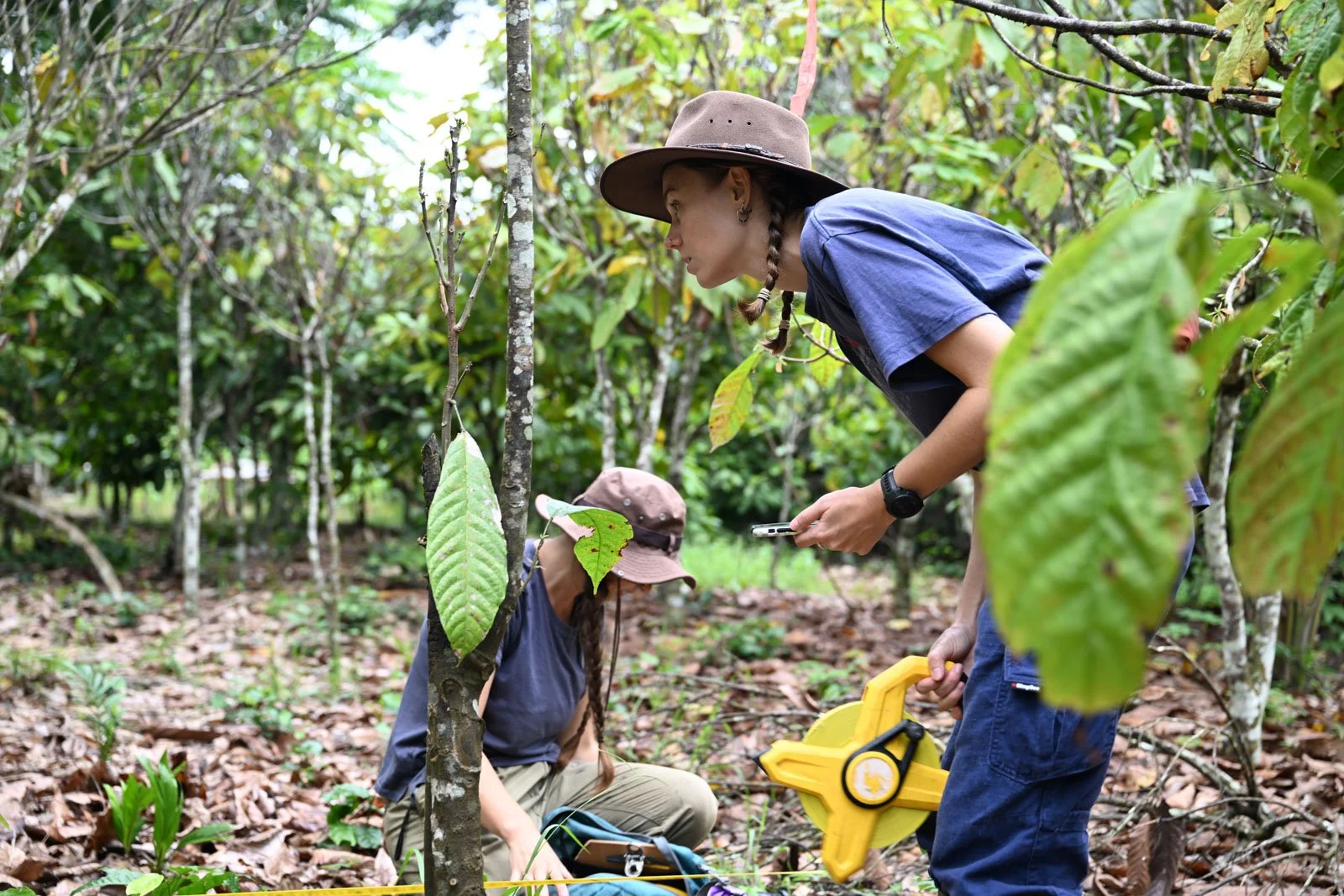
Hannah carefully inspects the plants growing in a cocoa farm.
Over the past year, we’ve been working on an important question for chocaholics everywhere: what does a wildlife-friendly cocoa landscape actually look like?
It’s a question that sits at the heart of sustainable agriculture in West Africa. Cocoa supports millions of livelihoods and underpins a global industry, but it also overlaps with some of the world’s most important biodiversity hotspots. Finding ways to make these landscapes work better for both people and nature is a real challenge, and one that requires solid, on-the-ground evidence.
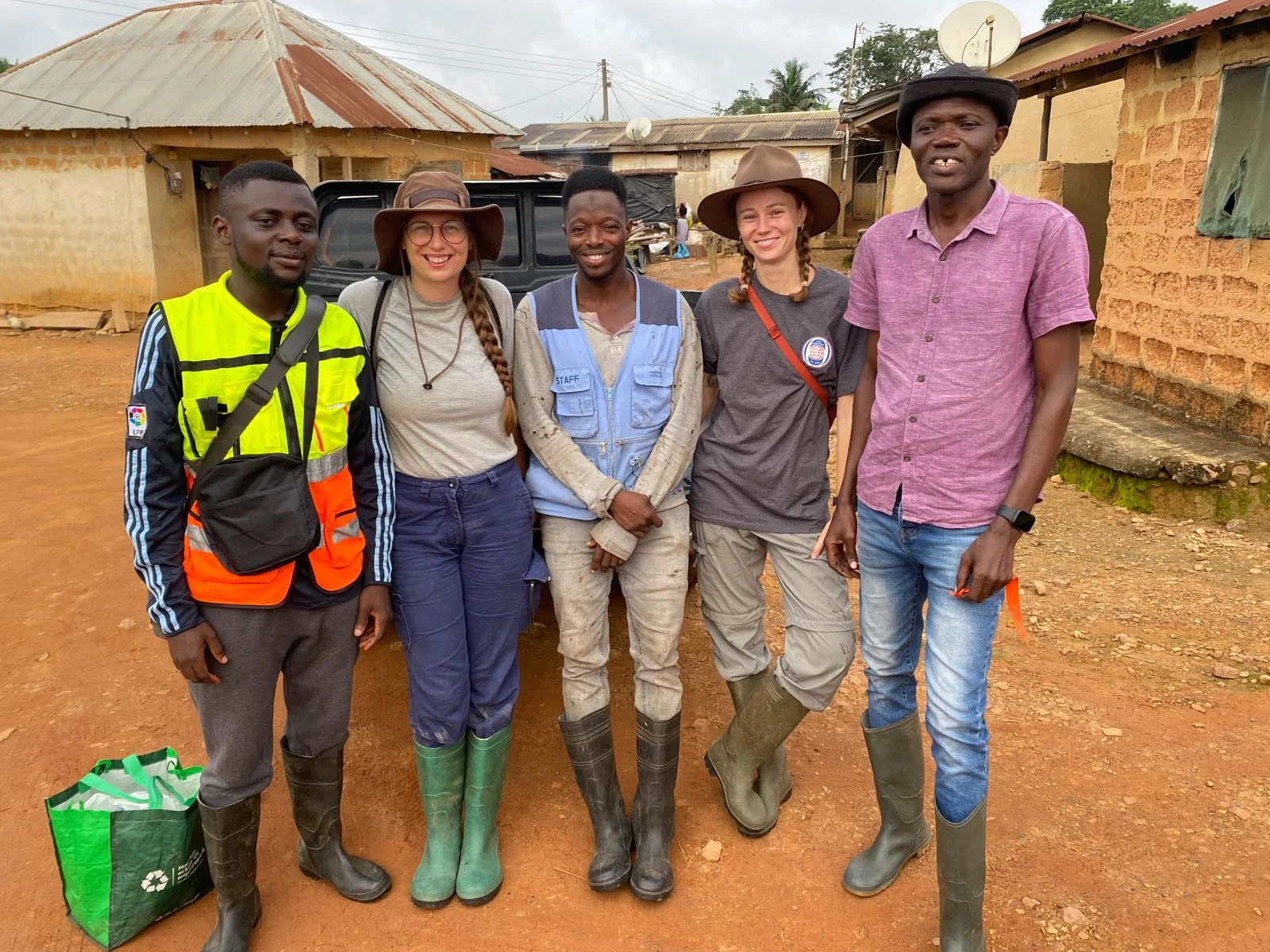
This past year marked a major milestone for the project. We completed an ambitious biodiversity field campaign in the landscapes surrounding Kakum National Park in Ghana, surveying 46 sites across a mix of cocoa farms and intact forest. Bringing this together was no small feat. Fieldwork in these environments is never straightforward, there were long days navigating rough roads, working through dense vegetation, and dealing with the inevitable equipment hiccups, but thanks to an outstanding team led by Hannah Rigney and Charlotte Jenkins, along with strong local partnerships, we were able to deliver one of the most comprehensive biodiversity datasets yet collected in a West African cocoa landscape.
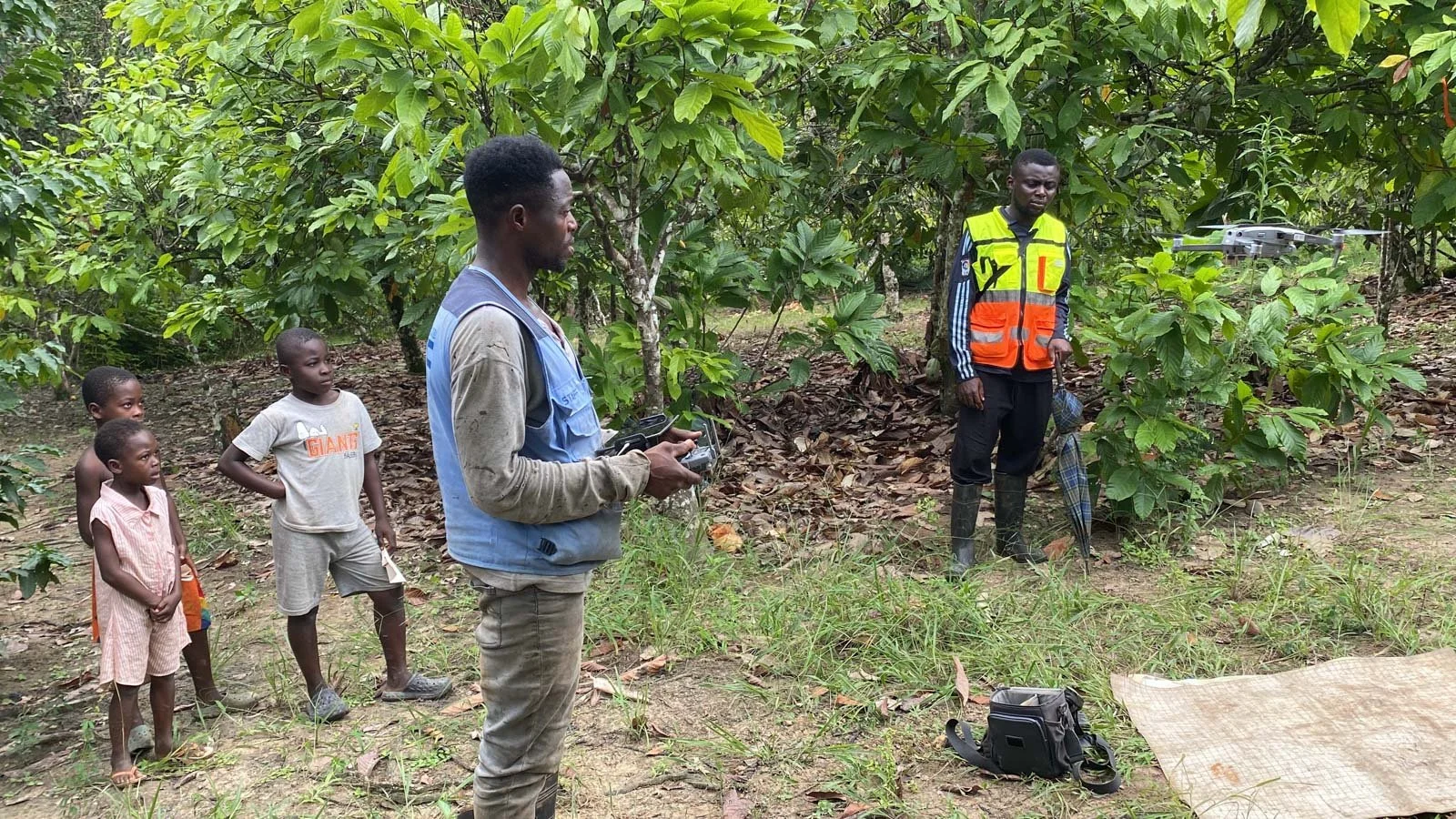
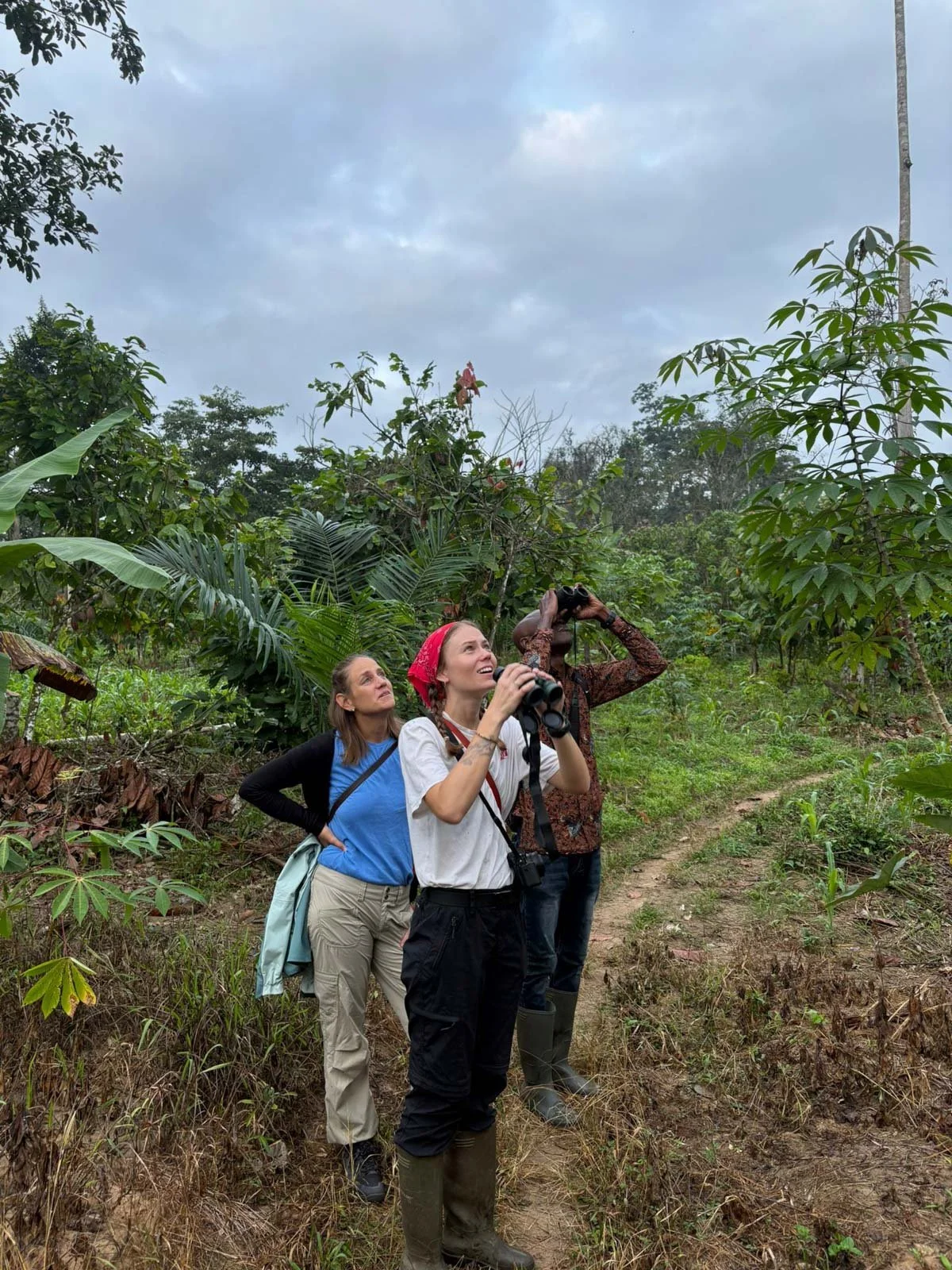
Across these sites, we combined bird surveys, camera trapping for mammals, vegetation measurements, and drone-based mapping of shade-tree cover. The result is a rich, multi-layered dataset that gives us an unusually detailed view of how biodiversity responds to different types of cocoa farming systems.
Some of the early patterns emerging from the data are both clear and important. Perhaps most strikingly, intact forests remain irreplaceable. Across all taxa we surveyed, forests consistently supported higher biodiversity than cocoa farms. Tree diversity, for example, was roughly four times higher in forest plots, and many mammal species were found only in forest habitats. These results reinforce a key point: protecting remaining forests has to remain a central priority.
At the same time, the data also highlight real opportunities within cocoa systems themselves. Not all farms are equal, and one of the strongest signals we’re seeing is the role of shade trees. Within cocoa farms, tree diversity increases markedly with shade-tree cover, and bird communities also appear more diverse in farms with more complex canopy structure. This suggests that well-designed agroforestry systems can meaningfully improve biodiversity outcomes, provided they are implemented alongside, rather than instead of, forest conservation.
One of the strengths of this project is its scale and design. Rather than focusing on individual farms, we shifted to surveying biodiversity across 25-hectare landscape plots, capturing the mosaic of farms, trees, and forest fragments that wildlife actually experiences. This approach is already proving valuable, giving us a much clearer picture of how species respond to both local management and the broader landscape context.
Equally important has been the collaborative nature of the work. This project is built on strong partnerships with colleagues and institutions in Ghana, including KNUST, the Forestry Research Institute of Ghana, and the Wildlife Division, as well as local experts who bring deep knowledge of the landscape. It has also supported capacity building, from field technicians to students, and contributed to longer-term resources such as herbarium collections.
We’ve also been fortunate to work closely with the Lindt Cocoa Foundation, whose support has made this work possible. What stands out in this collaboration is a shared commitment to evidence-based solutions and a genuine interest in improving biodiversity outcomes in cocoa landscapes. It’s encouraging to be working with a partner that not only recognises the challenges but is actively investing in understanding how to address them.
Looking ahead, the focus now shifts to turning this dataset into practical tools. The next phase of the project will involve building predictive models and developing spatial planning approaches to identify where agroforestry interventions can deliver the greatest biodiversity benefits for the lowest cost. The aim is to provide clear, actionable guidance that can support decision-making across the cocoa sector.
We’re also preparing to expand fieldwork into additional landscapes around Bia and Ankasa National Parks. This will allow us to test how consistent these patterns are across different environmental conditions and further strengthen the evidence base.
After a demanding but highly successful first year, there’s a real sense of momentum. We now have a strong foundation of data, a set of clear emerging insights, and a collaborative network that is working well. With continued partnership, particularly with organisations like the Lindt Cocoa Foundation that are committed to making a difference, we’re optimistic about what the next phases of the project can deliver.
Because ultimately, making cocoa landscapes better for biodiversity isn’t about a single intervention. It’s about understanding where to protect, where to restore, and how to manage the spaces in between, and using that knowledge to support both resilient ecosystems and sustainable production systems.