Getting more from urban greening
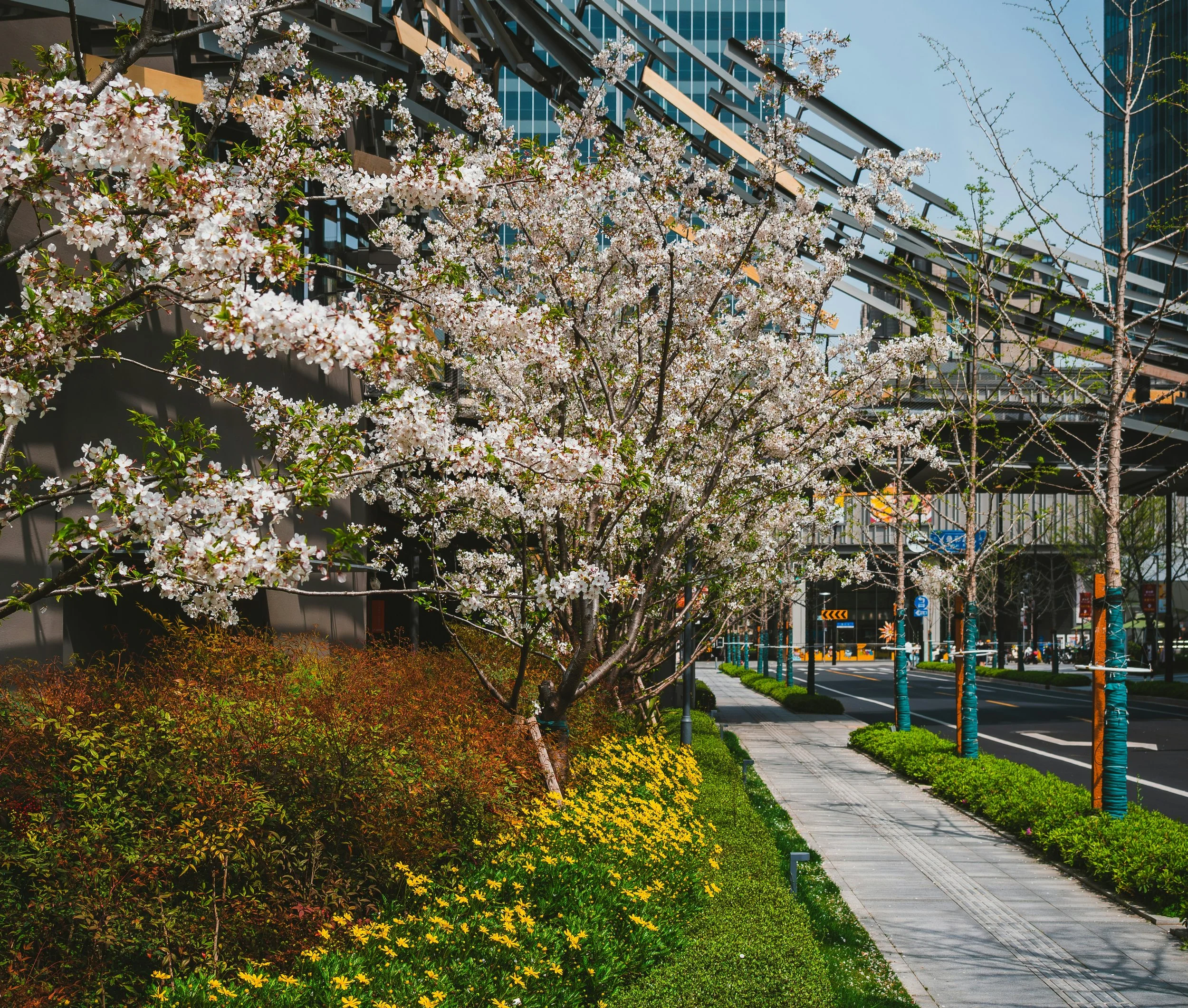
The same urban planting can evoke very different responses depending on where it is placed. Photo by Declan Sun
Cities around the world are investing heavily in urban greening. From street trees and pocket parks to planter boxes and parklets, there is growing recognition that bringing nature into cities can improve people's health and wellbeing.
But does every green intervention deliver the same benefits?
In a new paper published in Urban Ecosystems, Freya Thomas, Jacinta Humphrey and colleagues explored a surprisingly simple question: Does the location of a small urban greening intervention influence how people respond to it?
The team focused on one of the most common forms of contemporary urban greening: planter boxes. These small patches of vegetation are increasingly used in cities where space is limited, often appearing in streetscapes, outside businesses, or as part of broader efforts to green urban environments. Yet surprisingly little is known about how people perceive them.
Using digitally manipulated images, the researchers presented 1,200 participants with planter boxes placed in a range of urban settings. Some were located in residential streets, others in commercial areas, and others in social settings such as cafés and pubs. The size of the planter boxes and the amount of vegetation were also varied.
The results revealed that context mattered far more than the amount of greenery.
Participants' emotional responses differed dramatically depending on where the planter box was located. In some settings, the same planter box generated overwhelmingly positive reactions. In others, responses were far less favourable. In fact, differences in city context accounted for up to a 60% difference in emotional responses. By comparison, increasing the size of the planter box or adding more vegetation had relatively little effect.
This finding challenges a common assumption in urban greening: that adding more vegetation will necessarily deliver greater benefits. Instead, the study suggests that the surrounding environment strongly shapes how people experience urban nature.
The work has important implications for city planners and designers. Urban greening initiatives are often evaluated in terms of how much vegetation is added to a city. However, these results suggest that where nature is integrated may be just as important as how much nature is provided. Identical interventions may generate very different outcomes depending on their urban context.
The study also highlights a broader lesson for urban ecology. Human experiences of nature are not determined solely by ecological characteristics. They are influenced by the social and physical environments in which those experiences occur. Understanding those interactions will be essential if cities are to maximise the wellbeing benefits of urban greening.
As urban populations continue to grow and competition for space intensifies, small greening interventions are likely to become an increasingly important component of urban design. This research suggests that planners should think carefully not only about whether to add nature to cities, but where to place it to achieve the greatest benefits.